Tuesday, April 15, 2025

Shark Heart

Shark Heart: A Love Story by Emily Habeck is a weird-ass book raved about by the woman leading the weird-ass poetry workshop I took in February. I actually participated in three free workshops, and the poetry was my least favorite for many reasons. Poetry is a challenge for me even though I love it. The instructor did her best to her passion for the craft. And I did heed this book recommendation from her.

As so often happens with weird-ass books I read, I kind of like it, but it needs some tweaking/editing. It is a quick and easy read so that’s nice.  I originally rated it harshly, 3-stars on Goodreads, but after reviewing my highlights and writing this summary, I would change it to 4-stars.

The idea is a good one, creative and original, but the orchestration of all the pieces misses the mark for me. The structural elements, choppy chapters, and awkward transitions between viewpoints distracted me from the many profound declarations, such as this one.

“Joy and grief are human birthrights, but mostly, being alive is everything in between.”

And this one.

“Truth and Love were complicated concepts on their own, and patching the two words together created a significant tangle Lewis could not unwind.”

The setting is an otherwise realistic world but it appears normal for some humans to contract an ailment that causes them to change into animals. The main character named Wren, who is not a bird but a woman, reflects on how her life has been impacted by these transformations. The story begins as her husband is diagnosed with a Carcharodon carcharias mutation. Thus begins the couple's misadventures as he gradually transitions into a great white shark. While the physical adaptations he endures are shocking, his psychological journey proves to be the most unsettling. 

The characters and even their animal counterparts, impart a great deal of wisdom as they are forced to reckon with their unusual circumstances. Their interactions are all a bit poetic and metaphoric. Maybe in its own weird-ass way reading this helped me connect to my own inner love of figurative language.

Maybe life has no ceiling, no floors, no walls, and we’re free-falling from the moment we’re born, lying to each other, agreeing to make invented ideas important, to numb ourselves from the secret.” “What’s the secret?” “Maybe what happens between birth and death isn’t as precious as we think.”

I’m no stranger to trying to unravel and make sense of my deep, dark emotions. Like the characters in this book, I always resurface to soak in thoughts of hope and optimism. So, I’ll conclude with this Mary Oliver quote that I love and that was shared at the poetry workshop I attended.

“Tell me, what is it you plan to do with your one wild and precious life?”


Friday, March 28, 2025

Tell Me Everything


Tell Me Everything by Elizabeth Strout should have been subtitled, But Leave Out the Uninteresting Parts Please. If I wasn’t so stubborn, I’d have given up on this book. Instead, I put my Kindle on airplane mode and dug in my heels to finish it. 
It took a month.

I cannot say I enjoyed this reading experience. The characters are wearisome, the dialogue is ponderous, and the plot is meandering. The best part for me was the ending. To think I would’ve missed it if I hadn’t perseveredActually the beginning kind of hooked me, but everything in between was just ‘meh’. Here is how the story grabbed my attention and drew me in. 

This is the story of Bob Burgess, a tall, heavyset man who lives in the town of Crosby, Maine, and he is sixty-five years old at the time that we are speaking of him. Bob has a big heart, but he does not know that about himself; like many of us, he does not know himself as well as he assumes to, and he would never believe he had anything worthy in his life to document. But he does; we all do.”

Full disclosure: Strout has written about this town and its inhabitants before. I’ve read and enjoyed some of their stories, and have felt not so much love for others.* Many of these characters make an appearance in Tell Me Everything, and therein lies a big part of the problem for me.

When these characters are introduced in this story, they  don’t have enough depth to them. For instance, I hated the book, Oh William and couldn’t really remember the backstory between Lucy Barton and her ex-husband William, so the continuation of their relationship in this novel didn’t resonate with me. Apparently, Strout also wrote about Bob and his brother Jim in The Burgess Brothers which I haven’t read. That background knowledge would’ve been helpful, too. 

On the other hand, I love the scene where Olive Kitteridge sits and observes everyone at Bob’s birthday party. Olive is the one character I appreciate, and I’m a huge fan of Strout’s other books that centered on her storyline. Added bonus: Imagine Francis McDormand in the television miniseries version bringing the curmudgeonly, down-home-Maine character to life!

The plodding, run-on-sentence style of writing also got on my last nerve. To me, it reflects the demeanor of the Lucy Barton character, who is supposedly a writer. Or maybe it’s just meant to capture the folksy familiarity of people from the Pine Tree State.

Whatever the reason, this stylistic distraction ruined my enjoyment of even the intriguing plot points such as the concept of Bob Burgess being a “sin-eater” because of his compassion for others. Similarly, the relationship between Olive and Lucy when they tell each other stories about the “unrecorded lives” of people they had known, would have been more poignant without the clumsy wordage. Here is an example of the kind of superfluous description I find annoying.

Bob bumped into Katherine Caskey on the street. “Bob!” she said, and he said, “Hello, Katherine.” They continued walking till they reached Katherine’s car. Katherine unlocked the car and took the package from Bob and stuck it into the backseat, then turned to Bob.

In contrast, here is a little, obtuse statement that I can really sink my brain into. 

“And yet, as is often the case, those of us who need love so badly at a particular moment can be off-putting to those who want to love us, and to those who do love us.”  

Here’s a little taste of why I relate so much to Olive. 

Olive was silent for a long moment. Then she said, meditatively, “It’s quite a world we live in, isn’t it. For years I thought: I will miss all this when I die. But the way the world is these days, I sometimes think I’ll be damned glad to be dead.”

Everything good about this book (finally, sort of) comes together in the last two chapters. “Love is love” seems to be the message, but even this universal theme is diluted by Lucy’s simplistic words, “Love comes in so many different forms, but it is always love.” 


*This in itself is a strange occurrence for me. How can the same author inspire such polar opposite reactions from me?

I had a similar experience with Fredrik Backman’s work. Loved: My Grandmother Asked Me To Tell You She’s Sorry and A Man Called Ove. Couldn’t get into: Anxious People or Bear Town.

🤷‍♀️

Tuesday, February 18, 2025

The Quick and the Dead


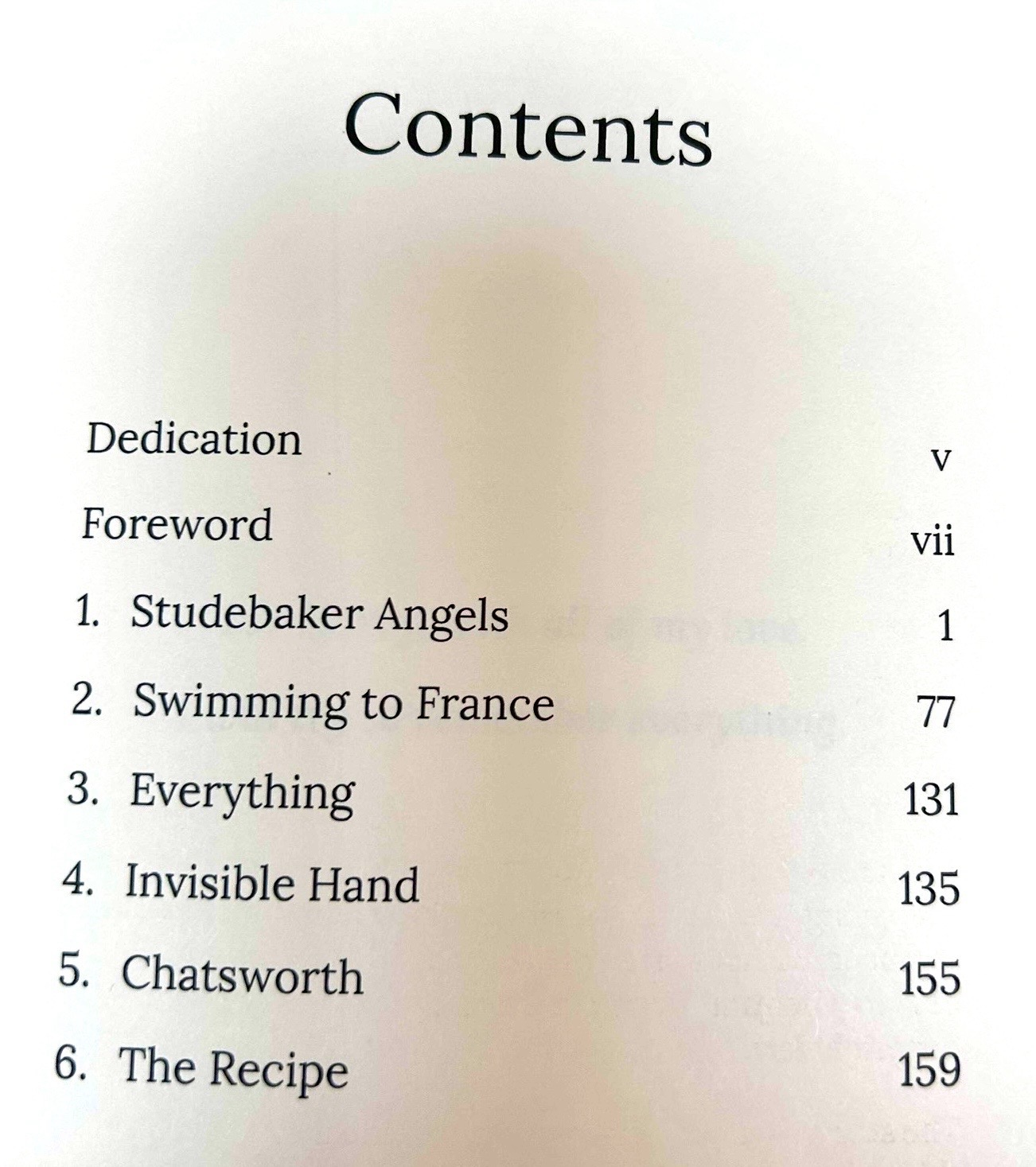
The Quick and the Dead—A Collection of Stories by Harry Van Sciver is a book with a remarkable story of its own. After the author’s untimely death at age 65 his widow decided to publish his writing posthumously, “As a way for him to stay with us a bit longer.” She extended copies to family friends to thank them for their support. A friend of mine  received a copy as a thank you for her kind words at the funeral, which she passed on to me to read.

Nestled between a heartfelt foreword written by his wife and a recipe for his excellent version of a perfect Manhattan with a Twist, are two complete and three incomplete short stories that reflect the percipience of a gifted writer, taken too soon.

Despite never having met the author myself, while reading his words, I couldn’t help but feel the heaviness of the tragic circumstances surrounding his death. I have no intention of critiquing a dead man’s work, nor is it necessary. I enjoyed both of his completed stories and can only imagine how more time could have enhanced this writer’s body of work. Let the cocktail speak for itself.  


Sunday, February 16, 2025

Little Dipper


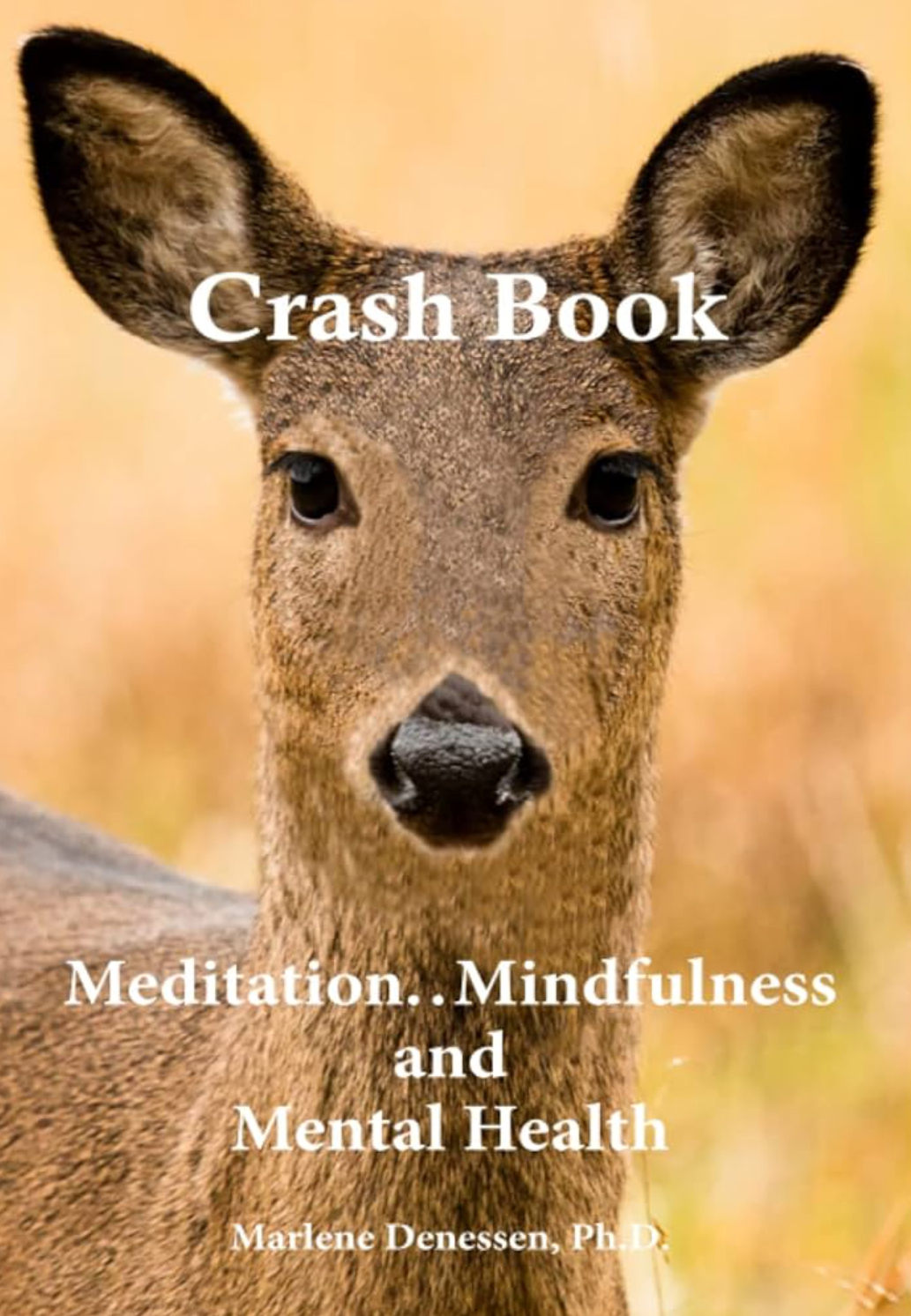
Little Dipper: Roots of Healing—Tides of Change by Marlene Denessen is a gem of a little book published in 2007, yet much of its wisdom remains relevant in 2025. 

“I listen to the radio as I exercise. The situation in the Middle East is violent and bloody, and it isn’t going to go away soon.”

Marlene Denessen was my therapist back in the late 1990s and early 2000s during my existential crisis of motherhood, divorce, identity. I knew she was smart, but I was unaware of the extent of her deep-thinking and writing abilities. Her counseling empowered me during a deeply confusing time in my life, and I credit her support with allowing me to move forward in life with gratitude and positivity. 

I continue to be inspired by Marlene’s outlook as I read this now, at an age close to hers when this book was written. This Amazon description captures the essence of the book. 

“Rendered in crisp and engaging prose, and drawing upon the insights of the long career of a professional helper, this book is a must-read for those who seek, in their own ways, simplicity, spirituality and wholeness.”

The story is a recounting of a period of time when the author was searching for clarity, grieving the loss of a grandchild, and seeking to simplify her way of life. Like Henry David Thoreau on Walden Pond, she purchases a remote plot of land in Canada where she stays for weeks at a time in the summer embracing a slower pace and healthy lifestyle surrounded by the beauty of nature.

Sounds like the perfect antidote to our current social malaise brought on by greed, intolerance, and (mis)information overload.


Friday, February 14, 2025

Bad Monkey


My dear friend, Phil Cunningham was the first to mention the book Bad Monkey to me recently. It jogged my memory about the author Carl Hiaasen whose writing I’ve been a fan of for quite a while. Then Wayne sent me these photos and said he was enjoying the book for its many uses of the word cunt. 

Years ago, prior to Bonnie’s Book Blog, I read either Skinny Dip or Sick Puppy. I can’t remember which. This is par for the course with this author's work. His writing is a tad formulaic and over-the-top, but funny as hell. As a teacher I loved Hoot and enjoyed sharing Hiaasen’s other young adult books with my students.

Turns out Bad Monkey is also an Apple TV miniseries now starring Vince Vaughan. Might be time for another free trial ;)

I’m not going to lie, about halfway through, I lost interest in the book’s trajectory. The location in the Bahamas and the island dialect got tedious for me. I didn’t care for the Voodoo Dragon Queen character, and I even began to worry about the fate of the bad-tempered monkey. Also, the constant introduction of new characters and shifts between different locations became dizzying!

I found myself laughing more at the beginning of the story and then the quirky bits got old. An unexpected twist energized me toward the end, and of course, I needed to know how it all wrapped up. A quick two-week read that I ultimately enjoyed more than I didn't. 

Maybe these quotes will help explain my synchronicity with the main character, Detective Yancy. "He wondered if something was mentally wrong with him for being content with what he had . . ." Yes, the same thought often goes through my head. "Usually when making love he strived for a purely sensory, uncomplicated experience. Incorporating a game or skit seemed too much like a class assignment." Ditto that, let's not make sex into work. And finally, "All I want out of a relationship is neutral buoyancy. Is that asking too much?" Really, it's a simple concept. Why is it so hard to find?

Fun fact: there’s a character named Bonnie in the story who is a sexual felon but not a cunt!

Edited to Add: Yes, I sprung for the cheap three-month subscription and was not disappointed by the Apple TV version of Bad Monkey. Vince Vaughan really brought Andrew Yancy to life, even though he's not at all how I envisioned the character in the book. Many other characters were more appealing to me onscreen as well, especially those in the Bahamas, and a few plot tweaks changed the story's overall tone for the better IMHO.